20 Definitive Tips For Deciding On Blockchain Sites
Wiki Article
The ZK-Powered Shield: What Zk-Snarks Block Your Ip And Identification From The World
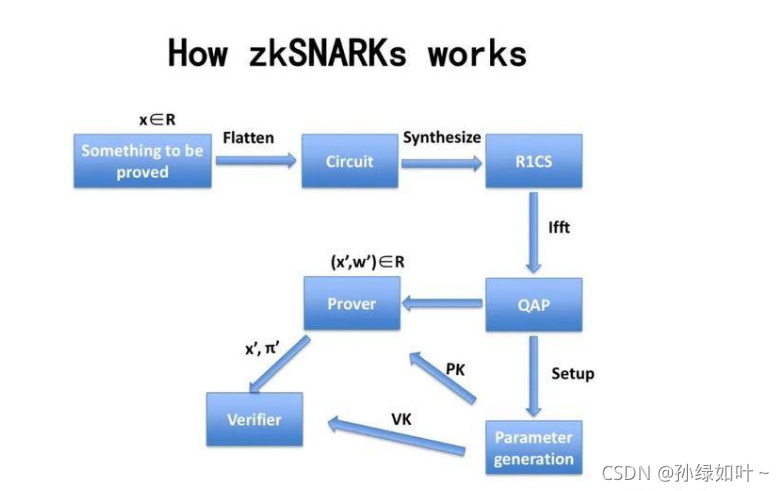
The privacy tools of the past use a concept of "hiding out from the crowd." VPNs route you through another server; Tor sends you back and forth between numerous nodes. They're effective, however they disguise from the original source by transferring it in a way that does not require disclosure. zk-SNARKs (Zero-Knowledge Succinct, Non-Interactive Arguments of Knowledge) introduce a distinctive paradigm in which you could prove you're authorized to act, but while not divulging what authorized party the person you're. For Z-Texts, you can send a message on the BitcoinZ blockchain, and the network will confirm you're an authentic participant using a valid shielded address, however, it's still not able determine what particular address broadcast it. Your IP, or your identity is not known, and the existence of you in the communication becomes mathematically inaccessible to the viewer, but in fact, it's valid and enforceable to the protocol.
1. The Dissolution Of the Sender-Recipient Link
Text messages that are traditional, even without encryption, reveal the relationship. A observer sees "Alice is chatting with Bob." ZK-SNARKs destroy this connection completely. In the event that Z-Text transmits an encrypted transaction and the zk-proof is a confirmation that there is a valid transaction--that's right, it is backed by sufficient funds and the correct keys--without revealing that address nor recipient's address. From the outside, this transaction appears as audio signal that originates from the entire network and however, it's not coming from any particular person. The connection between two particular human beings is then computationally impossible determine.
2. IP Security of Addresses at the Protocol Level, not at the Application Level.
VPNs and Tor secure your IP via routing the traffic through intermediaries. These intermediaries develop into new points to trust. Z-Text's use of zk-SNARKs means your IP address is not relevant to the transaction verification. As you broadcast your protected message to the BitcoinZ peer-to-peer network, it means you belong to a large number of nodes. The zk-proof assures that even observers observe the stream of traffic on the network they won't be able to connect the message received to the particular wallet that initiated it. This is because the proof doesn't contain that information. The IP's information is irrelevant.
3. The Abolition of the "Viewing Key" Challenge
In most privacy-focused blockchains with"viewing keys" or "viewing key" with the ability to encrypt transaction details. Zk-SNARKs, as implemented in Zcash's Sapling protocol that is utilized by Z-Text can allow you to disclose your information in a selective manner. It is possible to prove that you have sent them a message without sharing your address, your other transactions, and even the entirety of the message. The evidence itself is only given away. It is difficult to control this granularity when using IP-based networks where sharing this message will reveal the identity of the sender.
4. Mathematical Anonymity Sets That Scale globally
A mixing service or VPN and VPN, your anonymity will be not available to all other users with that specific pool the moment. In zkSARKs, your security secured is each shielded address throughout the BitcoinZ blockchain. Because the evidence proves there is some secured address, one of which is potentially million, but does not provide any indication of which, your privacy is as broad as the network. This means that you are not only in a small room of peers, but in a global group of cryptographic identity.
5. Resistance in the face of Traffic Analysis and Timing attacks
Highly sophisticated adversaries don't simply read IPs, they look at pattern of activity. They investigate who's sending data when and correlate the timing. Z-Text's use zk-SNARKs coupled with a mempool of blockchain, permits the separation of operation from broadcast. You may create a valid proof offline and then broadcast it as a node will transmit the proof. When you broadcast a proof, the time it was made for its incorporation into a block not necessarily correlated with the date you made it, breaking the timing analysis process that frequently can be used to defeat simpler tools for anonymity.
6. Quantum Resistance Through Hidden Keys
IP addresses are not quantum-resistant. In the event that an adversary could record your data now, but later crack the encryption the attacker can then link them to you. Zk-SNARKs, which are used in Ztext, protect the keys of your own. Your public key is never divulged on the blockchain since your proof of identity confirms you're holding the correct keys without actually showing it. Quantum computers, in the near future, will see only the proof, which is not the real key. All your communications are private due to the fact that the key used authenticate them was not exposed in the first place to be decrypted.
7. Unlinkable identities across several conversations
If you have a wallet seed You can also generate multiple shielded addresses. Zk's SNARKs lets you show that you own one of these addresses, without divulging the one you own. It is possible to engage in several conversations in ten different people, and no one else, including the blockchain itself, could tie those conversations to the same wallet seed. Your social graph is mathematically splined due to design.
8. The Deletion of Metadata as an Attack Surface
The spies and the regulators of this world often state "we don't really need the information it's just metadata." Internet Protocol addresses provide metadata. The people you speak to are metadata. Zk-SNARKs are unique among privacy methods because they obscure details at a cryptographic scale. The transaction itself does not contain "from" or "to" fields in plaintext. The transaction does not contain metadata that can be used to submit to. It is only the of the evidence. The proof shows only that a legitimate act took place, not who.
9. Trustless Broadcasting Through the P2P Network
When you use a VPN you are able to trust the VPN provider not to record. If you're using Tor, you trust the exit node's ability to not track you. The ZText app broadcasts your ZK-proofed transaction BitcoinZ peer-to'peer network. A few random nodes and send the data, and then you disconnect. Those nodes learn nothing because there is no evidence to support it. There is no way to be certain that you're the original source, considering you could be acting on behalf of someone else. The network can become a reliable service for private data.
10. "The Philosophical Leap: Privacy Without Obfuscation
In the end, zk-SNARKs are a leap of thought in the direction of "hiding" in the direction of "proving without disclosing." Obfuscation systems recognize that the truth (your Identity, your IP) can be risky and needs to be concealed. Zk-SNARKs understand that the truth is irrelevant. Only the protocol needs to understand that you're registered. Moving from a reactive concealing to a proactive lack of relevance is the basis of ZK's shield. Your personal information and identity are not concealed. They are just not necessary to the role of the network and thus are not required and never transmitted or made public. Read the most popular shielded for blog advice including encrypted messenger, private message app, text message chains, messenger to download, encrypted messages on messenger, encrypted text, text messenger, encrypted messenger, messenger not showing messages, messenger not showing messages and more.
The Mutual Handshake: Rebuilding Digital Trust in a Zero-Trust World
The internet was built upon the foundation of an implicit connection. Anyone can write to anyone. Anyone can be a follower on social media. This freedom, while beneficial was a source of trust. Spyware, phishing and even harassment are signs of a system in which connecting isn't a requirement for acceptance. Z-Text is a way to change this assumption with the handshake that is cryptographic in nature. Prior to the first byte data can be transferred between two parties, both must explicitly agree to the exchange, and that agreement is confirmed by the blockchain. This is verified using Zk-SNARKs. The simple fact of requiring mutual consent on the protocol level - builds digital trust from the foundation up. It mimics the physical world where you're not able to communicate with me unless I accept my acknowledgement. I also cannot speak to you until you acknowledge me. If you live in an age with zero credibility, the handshake becomes one of the most important elements in contact.
1. The handshake as is a ceremony of Cryptography
In Z-Text the handshake doesn't consist of just an "add contact" button. It's a cryptographic event. Party A generates a connection request containing their public key as well as a temporary ephemeral address. The party B receives this message (likely in-band or via a published post) and sends a response that includes their public key. Two parties, in turn, independently deduce an agreed-upon secret which creates the channel for communication. The process guarantees that each of the participants has participated and that no man-in-the-middle can enter the channel without being detected.
2. A. The Death of the Public Directory
Spam can be found because email addresses or copyright are included in public directories. Z-Text does not include a public directory. The z-address you provide is not listed on the blockchain. Instead, it can only be found in transactions protected by shields. An interested party must know something about you--your public identity, a QR code, a secret secrets to establish the handshake. It isn't possible to search for a contact. It eliminates the most important source for unsolicited contact. You are not able to spam an addresses you can't find.
3. Consent is used for Protocol but not Policy
In centralized apps, consent is considered a standard. Users can choose to ban someone after they contact you, even though they already invaded your inbox. In ZText, consent is an integral part of the protocol. A message is not sent without the prior handshake. Handshakes themselves are negligible proof that both parties agreed to the connection. So, the protocol enforces the agreement rather than simply allowing individuals to be able to react to violators. It is a respectful architecture.
4. The Handshake as a Shielded Moment
Because Z-Text relies on zkSNARKs for its handshake, the handshake itself is encrypted. If you approve a connecting request, the transaction will be secured. A person who is watching cannot tell that you and a different party have constructed a link. The social graph you have created grows invisible. Handshakes occur in cryptographic darkness, visible only to the two parties. This is unlike LinkedIn or Facebook, where every connection will be broadcast to the world.
5. Reputation Without Identity
Who do you choose to greet? Z-Text's method allows for introduction of reputation systems, which have no dependence on revealed identification. Because connections are secret, the possibility exists that you receive a "handshake" solicitation from someone you share one of your contacts. The contact shared with you could provide a guaranty that they are trustworthy by a cryptographic certificate, and without divulging the identity of each of you is. This trust can be viewed as a zero-knowledge and transitory it is possible to be trusted for the reason that someone you trust trusts their identity, without having to learn about their identity.
6. The Handshake as Spam Pre-Filter
Even if you don't have the requirement of handshakes A determined spammer can possibly request thousands of handshakes. The handshake request itself, along with each other, demands a micro-fee. Spammers now face the similar financial hurdle at connect stage. A million handshakes cost $30,000. In the event that they want to pay an amount, they'll still want you to accept. Micro-fee combined with handshake creates an additional economic obstacle that is financially crazy for mass outreach.
7. Repair and Transferability of Relationships
If you restore your ZText identity using your seed phrase the contacts also restore as well. But how do you determine who your contacts are with no central server? The handshake protocol adds a minimal, encrypted record of the blockchain, which is it is possible to establish a connection between two separated addresses. After you restore your wallet is scanned for these handshake notes and creates a new contact list. Your social graph is stored on the blockchain, but readable only by you. Your contacts are as portable and as are your accounts.
8. The handshake can be used as a Quantum-Safe Requirement
The mutual handshake establishes a sharing of a secret between two persons. The secret can be used to determine keys needed for subsequent communications. Because the handshake in itself is a protected event which never gives public keys away, it can be a barrier to quantum encryption. An attacker is not able to decrypt the handshake to discover what the relationship was because the handshake ended without revealing any of the key's public. The commitment is permanent, however, it is not visible.
9. Handshake Revocation and Unhandshake
It is possible to break trust. Z-Text lets you perform an "un-handshake"--a cyber-cryptographic revocation or cancellation of the exchange. If you decide to block someone, the wallet transmits a revocation proof. The proof informs network that messages to the other party need to be blocked. Because it's on the chain, the cancellation is irrevocable as it cannot be ignored or reverted by the party's client. Handshakes can be reverted as well, however it's in the same way as the original agreement.
10. Social Graph as Private Property Social Graph as Private Property
And lastly, the handshake transforms who holds your social graph. When you are on a central network, Facebook or WhatsApp are the owners of the people who talk to whom. They can mine it and analyze the information, and offer it for sale. In Z-Text your social graph is encrypted and stored on the blockchain. It is accessible only by you. No company owns the map of your contacts. The signature ensures that the most complete record of the connection will be held by you as well as your contacts. They are protected by cryptography by the entire world. Your network is your property, not a corporate asset.
